

Rhodium Plating at the Jeweler: How Your Jewelry is Rhodium Plated and Why It's Worth It
Rhodium plating is one of the most effective methods to visibly enhance and protect jewelry long-term.
Especially for white gold, the fine rhodium coating ensures a bright, even surface and a clear shine. At the same time, it reduces tarnishing and optically evens out minor signs of wear.
Many jewelry wearers opt for rhodium plating when their favorite pieces lose their luster or need to look fresher again.
In this article, you will learn how the process works at a jeweler, what advantages it offers, and in which cases rhodium plating is particularly worthwhile.
Rhodium Plating: Meaning, Process, and Costs of Rhodium Plating at a Jeweler
Rhodium plating gives your jewelry new radiance. The fine coating imparts a cool, elegant brilliance to the surface and reliably protects against tarnishing, especially for silver and white gold.
Jewelers like us at Herzog Loibner use a wafer-thin layer of rhodium, which optically softens signs of wear and brings out the original luster of your jewelry.
The costs usually remain manageable: Depending on the piece of jewelry, its condition, and the effort involved, you can expect to pay approximately 150 to 250 CHF (50 to 100 Euros). Smaller jobs may cost less, while more elaborate pieces may cost a bit more.
This investment is often a simple way to visibly enhance your favorite pieces.
How the Rhodium Plating Process Works
During rhodium plating, rhodium is evenly deposited on the metal surface using electricity.
Typically, the process proceeds as follows:
- First, the jeweler inspects settings, stones, and the surface, carefully removing dirt, grease, and residue.
- Next, they prepare the surface by polishing or targeted matting, as any unevenness will remain visible later.
- Then follows the electroplating bath: Under controlled electric current, the rhodium ions combine with the piece of jewelry, forming a uniform, fine protective layer.
- Finally, the jeweler checks the shine, color tone, and transitions to ensure a harmonious result.
This creates a new surface that clearly reflects light again and restores the jewelry's elegance.
Rhodium as a Precious Metal in Coating
Rhodium belongs to the platinum group and is one of the rarest precious metals in the world. Its exceptional brightness, high light reflection, and resistance to oxidation make it the preferred choice for high-quality jewelry coatings.
Since rhodium occurs in nature only in very small quantities, it is considered particularly rare. This rarity is also reflected in rhodium plating: Although the precious metal layer used is extremely thin, the material value still influences the cost of the refinement. For many jewelry wearers, this is a conscious investment in the long-term quality and radiance of their jewelry.
Therefore, jewelers use rhodium specifically to make white gold alloys shine more silvery and to protect silver from tarnishing, giving it the clear brilliance that characterizes modern jewelry aesthetics.
Alternatives to Rhodium Plating and When They Are Applicable
Depending on the condition and requirements, other solutions may also be sensible:
- Professional refurbishment through polishing or matting for minor signs of wear.
- Light white gold alloys that naturally require less rhodium plating.
- Alternative coatings, which offer different durability depending on the technique.
It remains important: Due to friction, for example on the undersides of rings or clasps, any rhodium plating will wear off over time. If your jewelry appears warmer again or shines unevenly, a new refurbishment is advisable.
If you want to optically change existing yellow gold or rose gold jewelry, rhodium plating is also an option. In this case, the piece of jewelry deliberately gets a new, brighter look. However, this coating is not permanent and should – depending on wearing intensity and wear – usually be renewed every one to two years to maintain the desired appearance.
This way, not only the shine is preserved, but also the connection to your piece of jewelry.
This way, you maintain not only the shine but also the emotional connection to your pieces of jewelry.

Signs That You Should Have Your Jewelry Rhodium Plated
Dull shine and a slightly warmer or darker surface indicate that it might be time to have your jewelry rhodium plated to restore its elegance and brilliance.
For Which Materials Is Rhodium Plating Useful?
Jewelers most frequently rhodium plate silver (against tarnishing) and white gold (for a cooler, brighter white and a fresher surface).
Typical indications for white gold: Your jewelry becomes slightly warmer or yellower again at edges or heavily worn areas. This often shows when the rhodium layer has thinned.
How Often Is Rhodium Plating Recommended?
There is no fixed rule, as frequency of wear, friction, and even the pH value of your skin influence durability.
As a guideline, many guides suggest: For heavily worn pieces (especially rings), a refresh after 1-2 years may be appropriate; necklaces and earrings often last longer because they experience less friction.
If you notice changes, such as a dull shine, uneven spots, or a warmer undertone, this is usually the best time for a consultation with a jeweler.
Duration and Durability of the Rhodium Layer
How long a rhodium layer remains visibly effective strongly depends on how your jewelry is worn and cared for. Rhodium itself is a very hard precious metal with high light reflection and excellent resistance to tarnishing.
However, as soon as the rhodium layer is mechanically stressed, for example by friction or contact with aggressive substances, it gradually wears off and exposes the underlying metal tone again.
Influence of Wearing Behavior, Polishing, and Chemicals on Durability
Your wearing behavior is the most important factor for the lifespan of the rhodium layer. Jewelry that you wear frequently and especially daily, such as rings, which are constantly in contact with skin, fabric, and surfaces, will show signs of wear sooner. For necklaces or earrings, which are exposed to less mechanical friction, the rhodium-plated surface remains intact longer.
In addition, certain chemicals can reduce the shine more quickly: Perfume, chlorine, cosmetics, or cleaning agents attack the layer and make it appear duller.
Regular, gentle polishing can compensate for minor tarnishing and soften the transition.
Tips for Extending the Lifespan of Rhodium-Plated Jewelry
If you want to extend the durability of your rhodium layer, conscious daily care helps:
- Put on jewelry last and take it off first: Apply perfume, cream, or hairspray before putting on jewelry, and take it off before going to bed or before cleaning tasks.
- Gentle cleaning: Use a soft cloth to remove dirt or skin oils after wearing; ideally, avoid aggressive cleaning agents.
- Separate storage: Store rhodium-plated pieces individually in soft pouches or lined jewelry boxes to prevent them from scratching each other.
- Careful polishing: A soft cloth can remove minor dullness; professional polishing ensures that the layer remains uniform for longer.
With these simple habits, you can significantly extend the brilliance of your rhodium-plated pieces and ensure they bring you joy for many years to come.
Individually Radiant Jewelry at Herzog Loibner: Service, Design, and Tradition
In addition to designing jewelry, Herzog Loibner also supports you in the care and preservation of surface and material quality.
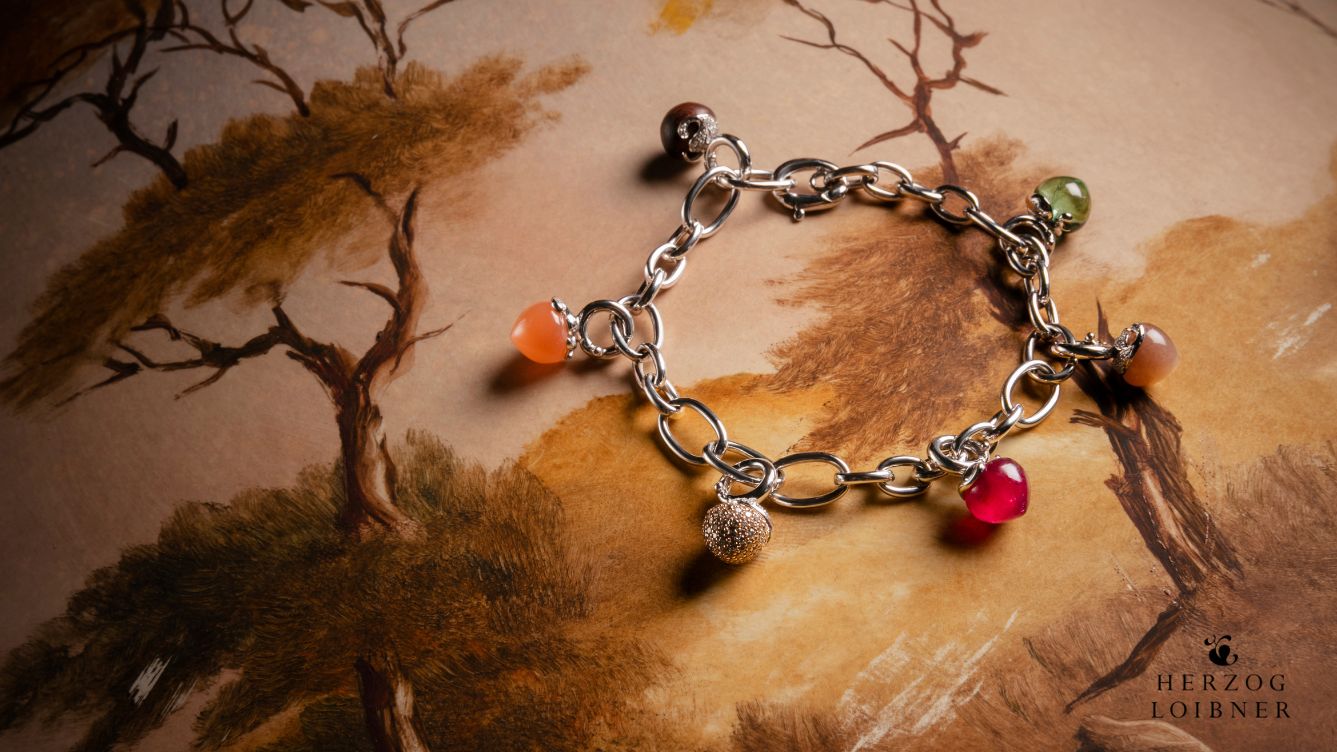
In addition to a selection of fine jewelry such as necklaces, bracelets, rings, and earrings with gemstones, we offer various services aimed at keeping jewelry in pristine condition long-term. These include cleaning, refurbishment, and professional rhodium plating of gold jewelry.
Before any refurbishment, a professional inspection of the material, setting, and condition of your jewelry is carried out. This allows us to decide whether rhodium plating is appropriate or if polishing or another form of surface treatment is sufficient.
The goal is not to "renew" your jewelry, but to visibly preserve its quality. This way, its form, character, and craftsmanship remain discernible for many years.
FAQ
Below you will find answers to further questions on the topic that have not yet been answered in this article.
What does it mean if my jewelry is rhodium plated?
When jewelry is rhodium plated, it means that a thin layer of rhodium has been applied to the metal; rhodium is a rare platinum metal that is not allergenic like nickel and is therefore often used as a protective layer on sterling silver or yellow gold settings, where the layer helps to increase scratch resistance and tarnish resistance.
Can yellow gold or white gold rings be rhodium plated?
Rhodium plating can be useful for white gold rings to brighten their appearance and achieve a uniform shine; for yellow gold, a rhodium coating is atypical as it covers the warm tone.
Is rhodium applied galvanically, electrolytically, or chemically?
The most common method is galvanic rhodium plating (electrolytic) in a dipping bath, but chemical processes also exist; in galvanic coating, rhodium is applied to the piece of jewelry by electricity, resulting in a uniform rhodium-coated layer.